
Savez-vous Planter les Choux

French Nursery Rhyme
Original Lyrics
Savez-vous planter les choux,À la mode, à la mode ?Savez-vous planter les choux,À la mode de chez nous ?
On les plante avec la main,À la mode, à la mode,On les plante avec la main,À la mode de chez nous.
On les plante avec le pied,À la mode, à la mode,On les plante avec le pied,À la mode de chez nous.
On les plante avec le coud’,À la mode, à la mode,On les plante avec le coud’,À la mode de chez nous.
On les plante avec le nez,À la mode, à la mode,On les plante avec le nez,À la mode de chez nous.
On les plante avec le g’nou,À la mode, à la mode,On les plante avec le g’nou,À la mode de chez nous.
English Translation
Do you know how to plant cabbages,In the fashion, in the fashion?Do you know how to plant cabbages,The way we do at home?
We plant them with our hand,In the fashion, in the fashion,We plant them with our hand,The way we do at home.
We plant them with our foot,In the fashion, in the fashion,We plant them with our foot,The way we do at home.
We plant them with our elbow,In the fashion, in the fashion,We plant them with our elbow,The way we do at home.
We plant them with our nose,In the fashion, in the fashion,We plant them with our nose,The way we do at home.
We plant them with our knee,In the fashion, in the fashion,We plant them with our knee,The way we do at home.
History and Meaning
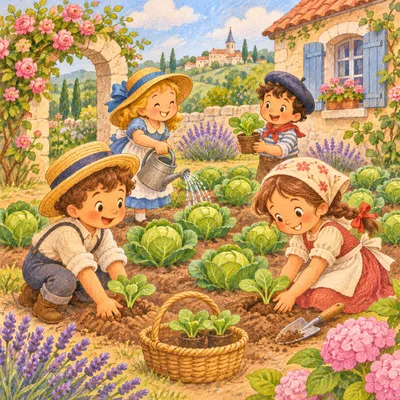
In this French action song, children pretend to plant cabbages. A hand sounds sensible, a foot a little less so, and by the time the song reaches the nose, everyone has to invent a new way to garden.
Which French words name the actions?
Choux means cabbages and sounds like shoo. La main is the hand, le pied the foot, le coude the elbow, le nez the nose and le genou the knee. The printed coud’ and g’nou show how the sung words fit the beat. À la mode de chez nous means “in the way we do things at home.”
How do you play the cabbage game?
- Pick an imaginary patch of soil and sing the question together.
- Point to the body part in each verse, then mime planting with it. For the nose, a small nod towards the imaginary patch is enough.
- Let a leader sing the first half of each verse and the rest of the group echo it. After the documented verses, invent a new one and let the group guess the body part from the mime.
The action verses follow Weckerlin's Chansons et rondes enfantines (1870), which describes the miming and the solo-and-chorus pattern. The familiar sung question introduces those verses; any new body parts invented during the game are additions.
Lyrics from nurseryrhymes.info