

Doon Po Sa Amin
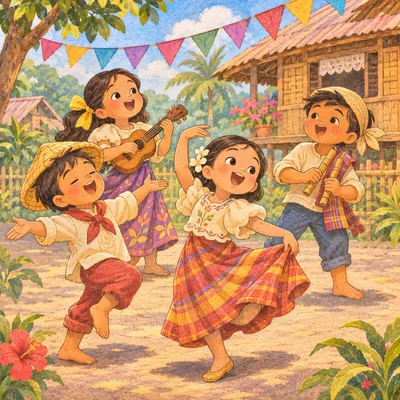

Tagalog Nursery Rhyme
Original Lyrics
Doon pa sa amin,Bayan ng San Roque,May nagkatuwaangApat na pulubi.
Nagsayaw ang pilay,Nanood ang bulag,Kumanta ang pipi,Nakinig ang bingi.
Doon po sa amin,Bayan ng Malabon,May isang matandangNagsaing ng apoy.
Papel ang palayok,Papel pati tuntong,Tubig na malamigAng iginagatong.
English Translation
Back where we live,In the town of San Roque,Four people who begWere having fun together.
The person with a mobility impairment danced,The blind person watched,The person who did not speak sang,The deaf person listened.
Back where we live,In the town of Malabon,There was an older personWho cooked fire like rice.
The pot was paper,Even its stand was paper,And cold waterWas used for fuel.
History and Meaning
“Doon Po Sa Amin” is a Tagalog folk song in which ordinary things happen the wrong way round. In the second scene someone cooks fire in a paper pot and fuels it with cold water. The San Roque scene uses old assumptions about what people with disabilities could do. Those assumptions belong to the old joke; the people themselves are not the joke to repeat in play.
What do the Tagalog words mean?
Doon means “there,” sa amin means “where we live” or “at our place,” and po adds politeness. The source sings pa in the opening line and po at the start of the Malabon verse. Palayok is a clay cooking pot, which makes a paper one an especially odd image. Nagsaing normally refers to cooking rice, which is why using the word for fire sounds backwards.
Which version is this?
These verses follow the Boy Scouts of the Philippines songbook, which prints San Roque first and Malabon second. To make a fresh nonsense verse, keep the idea of the Malabon scene and invent a silly tool and fuel of your own, such as a cardboard kettle heated with ice cubes.
Lyrics from nurseryrhymes.info